
Running a hospitality business in Singapore is not a simple 9-to-6 operation.
Hotels, restaurants, serviced apartments, event venues, and food and beverage (F&B) groups often depend on rotating shifts, weekend manpower, public holiday coverage, part-time staff, and overnight teams.
In this kind of environment, attendance isn’t just a human resources (HR) record; it’s vital for productivity. It affects service quality, payroll, compliance, and daily operations.
As such, a time and attendance system helps businesses track who’s working, when they started, when they ended, how many hours they worked, and which records need further checking. This real-time system is crucial to give managers better visibility across departments and locations, which can then improve overall employee attendance.
However, automation alone can’t solve every attendance issue. Some staff may forget to clock in, or an overtime schedule may be approved verbally. Shift swaps may also be discussed through WhatsApp, but are not updated into the system.
This is where human support matters. While the system captures the data, people are needed to monitor, verify, and act on it.
For hospitality companies with already strained teams, staff and workshift monitoring may not be feasible. So, hiring an outsourced support team may be the most sustainable move.
To learn more about how automation and human support can be combined for a robust shift monitoring system, this article details all that you need to know.
What Is a Time and Attendance System?
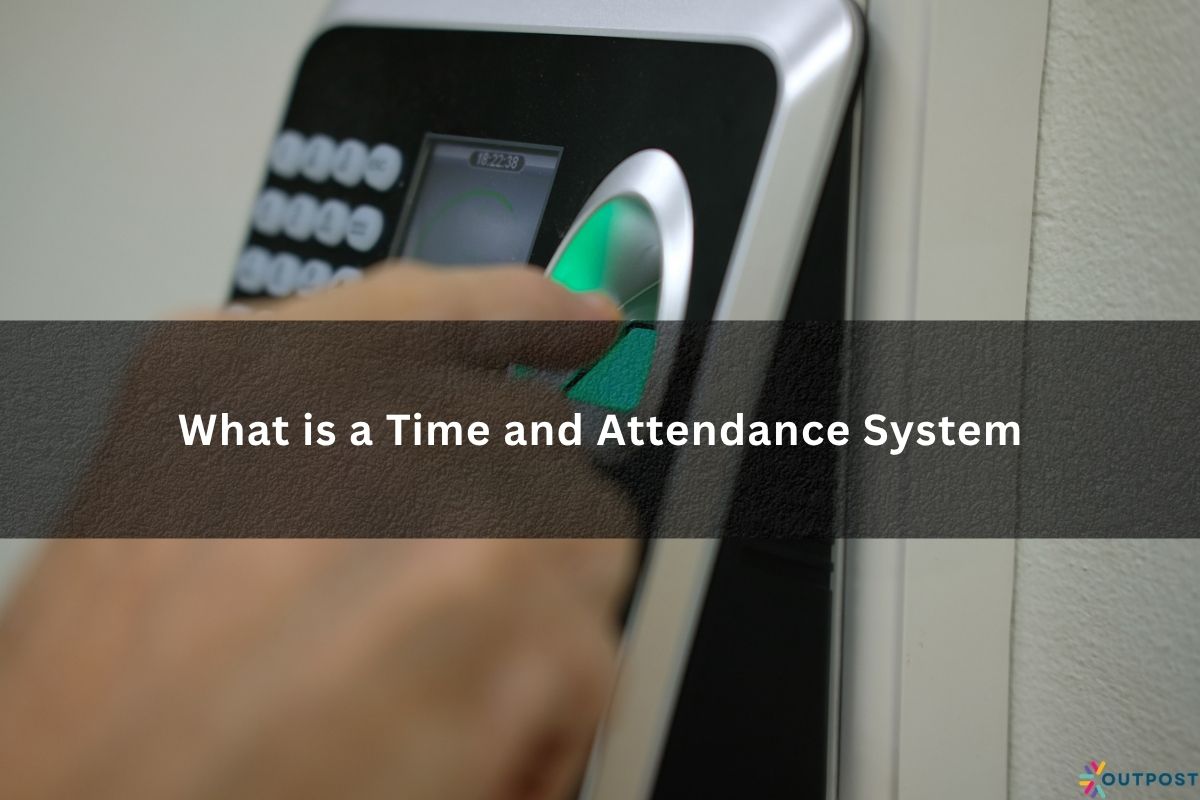
A time and attendance system is a real-time digital tool used to record employee work hours. At its most basic level, it tracks all employees within a company based on:
- Clock-ins
- Clock-outs
- Breaks
- Overtime
- Lateness
- Absences
- Attendance patterns
Traditional systems rely on paper timesheets or manual Excel updates for employees to clock in, which can be replaced by more efficient time attendance software.
However, modern systems may include:
- Mobile clock-ins
- Advanced biometric authentication and attendance (i.e. fingerprint)
- QR code scanning
- GPS-based location tracking
- Recognition feature (i.e., facial recognition)
- Scheduling features
- Payroll integration
Managers can use a single system to see attendance records more clearly.
In hospitality, this applies to front desk staff, housekeeping teams, kitchen staff, waiters, banquet crews, security officers, maintenance workers, and part-time employees, all of whom are tracked through a time attendance system.
For example, a Singapore hotel may have housekeeping staff starting in the morning, restaurant teams working across meal periods, event staff supporting evening banquets and front desk employees covering the night shift.
Ultimately, a time and attendance system helps the business manage employees through accurate attendance records on who reported for duty, who was late, and which records need checking before payroll, to prevent buddy punching and time theft.
Why Time and Attendance System Monitoring Matters in Singapore Hospitality
While a time and attendance system is useful, accurate time monitoring is what makes it reliable.
As most hospitality businesses often have tight manpower schedules, one missed shift can affect the entire operation across different departments—from room cleaning and breakfast service, to guest check-ins or after-hours support.
Monitoring this system is even more important in Singapore. As mandated by the Ministry of Manpower (MOM) under the Employment Act, employers must maintain detailed employment records, which can be efficiently managed through HR and payroll systems.
In fact, MOM states that all employees covered by the Employment Act must have their records kept, which includes the latest two years for current employees and the last two years for ex-employees. These will be kept for one year after they leave.
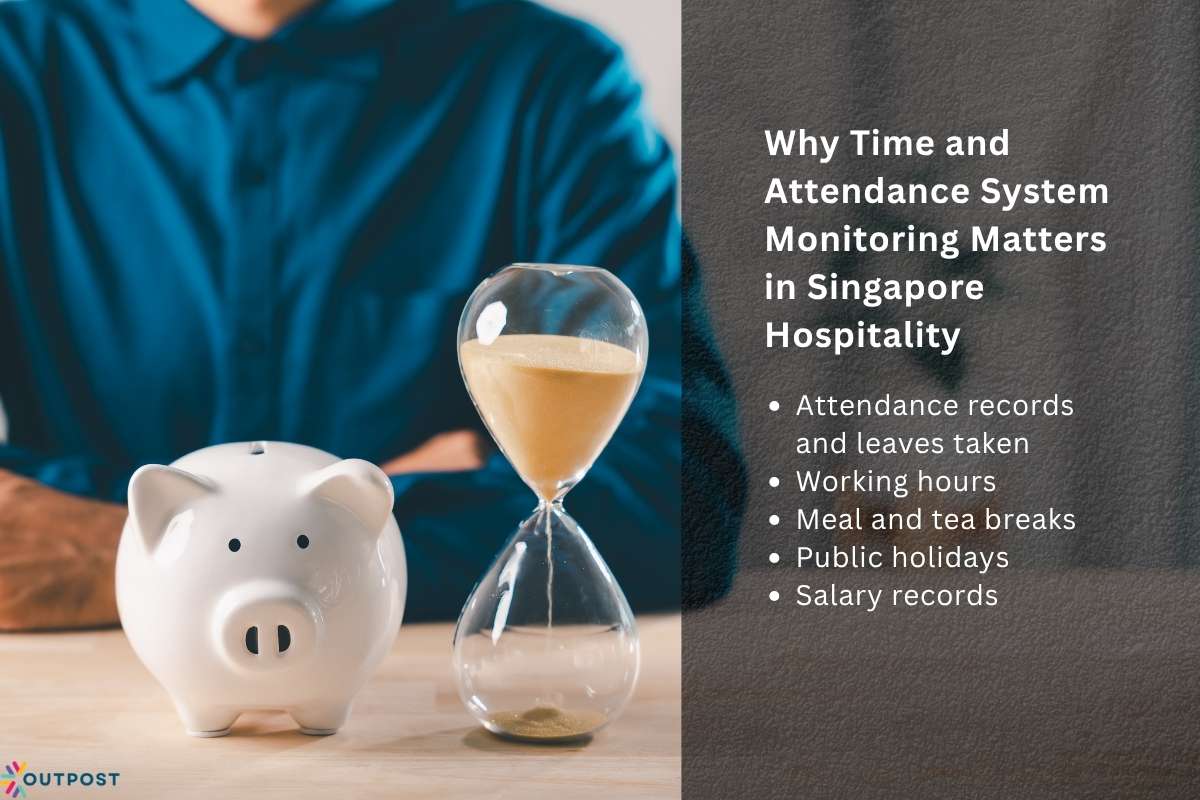
The employment records include:
- Attendance records and leaves taken
- Working hours
- Meal and tea breaks
- Public holidays
- Salary records, including overtime hours and overtime pay
For hospitality businesses, this means that attendance data is not only operational, but also ensures that employees are paid accurately and prevents payroll errors.
This is because this attendance solution can affect payroll accuracy, overtime claims, rest day pay, public holiday pay, and internal record keeping.
To further highlight the need for time and attendance systems, MOM also states that for employees covered under Part 4 of the Employment Act:
- Generally not required to work more than six consecutive hours without a break;
- Overtime work must be paid at least 1.5 times the hourly basic rate of pay; and
- Can only work up to 72 overtime hours in a month, unless an exemption applies.
On another note, a time and attendance system gives central visibility for HR teams that may not be physically present at every outlet.
However, someone still needs to review late clock-ins, missed punches, shift swaps, and unusual overtime before payroll is finalised.
Key Features to Look for in a Time and Attendance System
More than just recording clock-in and clock-out times, a good time and attendance software should support monitoring, reporting, and follow-up, which allows for immediate insights into employee attendance and time tracking.
Singapore hospitality businesses should look for the following key features for better time attendance management:
- Real-time attendance dashboard so managers can see who has reported for work and who has not.
- Mobile app, biometric, or QR clock-in for teams working across different sites or departments.
- GPS or location-based attendance tracking to reduce incorrect clock-ins from the wrong location.
- Shift scheduling and roster management for rotating teams, split shifts and part-time staff.
- Overtime and break tracking to support payroll accuracy, daily attendance records, and working-hour records.
- Payroll integration to reduce manual calculations and duplicate data entry.
- Exception alerts for missed clock-ins, late arrivals, early clock-outs or no-shows.
- Reporting and audit trails so managers can review repeated lateness, absenteeism or overtime trends.
- Multi-location support for hotel groups, restaurant chains and hospitality operators with several sites.
- Access control and data security features so attendance and employee records are handled properly.
For hospitality businesses, the goal isn’t just to collect attendance data.
It’s to make sure the data can be trusted and acted on quickly for better employee attendance accuracy.
Where Automation Helps Hospitality Businesses with Time and Attendance Systems
Automation is genuinely helpful for hospitality businesses.
Not only does it reduce the need for paper timesheets, but it also reduces manual consolidation and repeated checking across different supervisors or outlets.
In this way, managers get clearer records, HR teams can prepare payroll faster, and business owners can identify attendance patterns before they become larger manpower problems, ultimately enhancing productivity.
This direction also aligns with Singapore’s broader hospitality modernisation transformation through improved time tracking.
The Singapore Tourism Board’s (STB) Hotel Industry Transformation Map 2025 encourages hotels to adopt integrated front-of-house and back-of-house systems powered by data analytics.
STB states that these systems can help the industry move beyond basic standalone solutions towards smarter and leaner operations. In this case, the integration of HR systems.
In practical terms, a time and attendance system gives managers useful visibility. It can help a business identify frequent late arrivals in housekeeping, track overtime patterns in F&B, or monitor if night shift staff have reported for duty.
However, automation works best when the records are clean and the process is followed.
Once exceptions appear, human judgment is still needed.
Why Automation Alone Is Not Enough for a Time and Attendance System
For hospitality businesses that deal heavily with people, an automated time and attendance system alone isn’t enough.
A time and attendance system can flag a problem, but it can’t always understand the reason behind it.
For example:
- An employee forgetting to clock in during a busy breakfast rush.
- A part-time waiter clocking in at the wrong outlet.
- A banquet team working beyond scheduled hours because an event ended late.
- A supervisor verbally approving overtime but forgetting to update the system.
- A staff member swapping shifts through WhatsApp, but the roster still shows the original employee.
In each case, the system may record an exception. But someone still needs to find out what happened, check with the relevant supervisor, and decide how the record should be corrected to ensure accurate attendance.
This is especially important before payroll processes. If attendance data is wrong:
- Employees may be underpaid or overpaid.
- Overtime may be missed.
- No-pay leave may be recorded incorrectly.
- Rest day or public holiday work may not be properly reflected.
A Singapore hotel banquet is a good example. If a wedding dinner runs late and several part-time staff stay beyond their scheduled shift, the system may record additional hours.
But a person still needs to confirm if the extra hours were approved, which event the staff were assigned to, and how the hours should be passed to payroll using the time clock.
Ultimately, automation detects the issue. Human support resolves it.
How Outsourced Teams Can Support a Time and Attendance System
Most of the time, hospitality businesses have strained or understaffed teams.
As such, having an outsourced team can be one of the most useful solutions for covering more work without going overhead.
Given that many attendance-related tasks are repetitive, detail-heavy, and time-sensitive. They don’t always require a senior HR manager, but they do require someone reliable to monitor, check, and follow up on employee time.
An outsourced support team can help hospitality businesses by:
- Monitoring attendance dashboards for missed clock-ins and no-shows.
- Checking late arrivals and early clock-outs.
- Following up with staff or supervisors through phone, WhatsApp or email.
- Updating records based on approved shift changes.
- Preparing daily or weekly attendance reports.
- Flagging repeated lateness, absenteeism or unusual overtime.
- Checking attendance records before payroll cut-off.
- Escalating urgent manpower gaps to the duty manager.
- Supporting data entry, validation and record clean-up.
- Providing monitoring support beyond normal office hours.
This does not mean outsourcing replaces HR.
It means HR and operations managers get a support layer that handles the routine checking, chasing, and reporting.
The internal team can then focus on approvals, staff planning and guest-facing priorities.
One service provider for outsourcing needs is Outpost.
Their model offers data entry services, which include tracking hours, monitoring performance, data accuracy, confidentiality, flexible support, and scalable assistance.
Having an outsourced team also means that all hours are tracked and performance monitored as they cover after-hours work as well.
To support human agents, automated data validation, regular quality audits, employee training, and attendance tracking software are then used to maintain accuracy.
Outpost’s virtual assistant service also shows how outsourced staff can support scheduling, customer support, email management, bookkeeping, and data entry, all while utilising payroll software and attendance systems for efficiency.
The service highlights trained assistants, back-up team continuity, flexible support and tracked hours that can supplement many time and attendance tools.
For a hospitality operator, this kind of support can be applied to attendance monitoring.
Ultimately, a hybrid model allows for a robust time and attendance system.
The software records the data. The outsourced team checks the exceptions. The manager makes the final decision when judgment is needed.
Choosing the Right Time and Attendance System and Support Setup
The right setup isn’t just about choosing software. It’s about building a workflow around the software.
Hospitality businesses should choose a time and attendance system that supports shift work, multiple locations, overtime tracking, break records, payroll exports, and clear exception reporting.
For businesses with several outlets or departments, multi-location visibility is especially important.
Another important thing to consider is who will conduct the daily monitoring of the system using real-time data from the time attendance software. This is because a dashboard is only useful if someone reviews it, while alerts are only helpful if someone follows up.
Given these, a practical support setup should include clear SOPs for tracking attendance and working hours, including:
- Missed clock-ins
- No-shows
- Shift swaps
- Overtime approval
- Payroll cut-off check
- Urgent manpower escalation
It should also define which issues can be handled by an outsourced support team, and which issues must be approved by an internal manager.
For example, an outsourced team may be allowed to contact a supervisor about a missing clock-out, prepare a weekly attendance exception report, or update records based on approved shift changes.
But final approval for overtime, disciplinary action or payroll changes should remain with the authorised manager, who can review attendance patterns generated by the time card system.
Therefore, the best setup combines system visibility with human accountability.
Final Thoughts: Hybrid Time and Attendance Systems in Hospitality
A time and attendance system can help Singapore hospitality businesses improve visibility, payroll accuracy, and workforce control, which is especially useful for those that operate across shifts, weekends and public holidays.
However, automation alone isn’t enough.
A system can record attendance, but it can’t always understand context, resolve disputes, or follow-up with staff.
Human support is still needed to monitor exceptions, verify records, and act quickly when attendance issues affect operations.
For hospitality businesses already working with lean teams, outsourcing this monitoring layer, added with the right time and attendance software, can be a practical way to improve reliability without adding more pressure to managers.
While the system captures the data, the people make sure the data is accurate, complete and useful.
About the Author: Tansi G