


As patients become more digitally savvy and time-conscious, their expectations of private healthcare have changed.
Their preferences have been shaped to focus not only on outcome but also convenience.
In 2026, patients expect faster access to specialists, seamless use of digital tools, and flexible care options such as telehealth.
Understanding how these expectations are evolving is essential for private specialist clinics aiming to remain competitive and patient-centred.
Still, meeting these demands without overwhelming in-house teams, requires navigating potential solutions.
One example, many clinics are turning to external support options like outsourcing.
For more details on this, check our page on employing virtual medical receptionists from Singapore.
Understanding Patient Expectations of Private Specialist Clinics in 2026
Understanding patient expectations in 2026 means looking beyond what happens inside the consultation room.
Key points on patient expectations in 2026:
- Patient preferences are defined by convenience.
- These expectations are shaped by everyday experiences outside healthcare.
- From online banking to food delivery, and now healthcare, patients expect seamless accessibility.

This shift changes how patients define “good service.” It is no longer just about seeing a reputable specialist.
Patients pay close attention to whether their experience with the clinic feels smooth.
This means that enquiries are acknowledged promptly, and follow-ups are handled clearly.
Small delays or unclear communication can quickly lead to frustrations, even if the clinical care itself meets expectations.
There is also a growing expectation for flexibility and choice.
Patients want care models that adapt to their schedules rather than the other way around.
This includes:
- Being able to manage parts of their care remotely
- Receiving updates without having to chase the clinic
- Feeling confident that administrative processes are well organised behind the scenes.
Ultimately, patient expectations of private specialist clinics in 2026 are shaped by consistency and reliability.
Clinics that understand this shift are better positioned to design services that align with modern patient behaviour.
What Patients Now Expect from Specialist Clinics
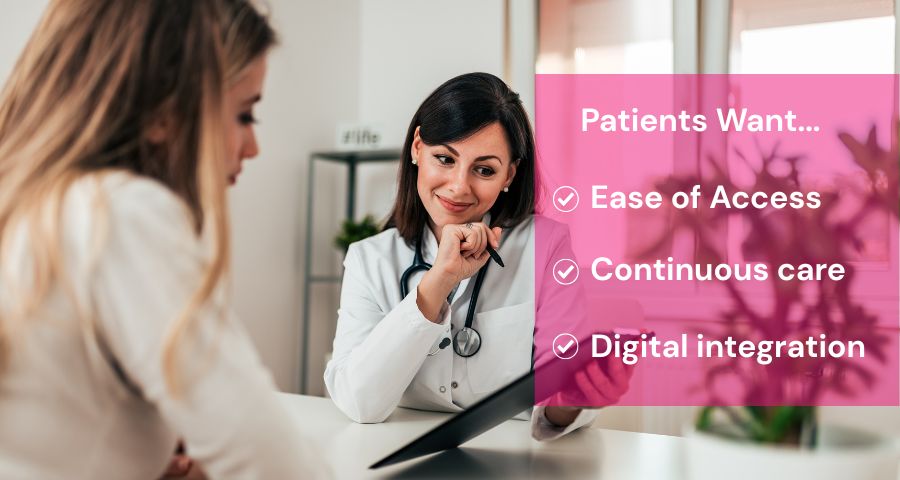
1) Ease of Access
One of the most visible expectations is easy access.
Patients expect online appointment booking, automated reminders, and responsive communication for enquiries or follow-ups.
When appointment requests, changes, or questions are handled promptly, patients perceive the clinic as attentive.
2) Continuous care
There is also a growing expectation for technology to support consistent care delivery.
Digital records and structured follow-up systems help ensure patients do not have to repeat information or chase updates.
From a patient’s perspective, this signals that their care is coordinated and thoughtfully managed.
3) Digital integration
Remote care tools also play an important role.
Telemedicine platforms are now commonly expected for consultations or discussions that do not require physical examination.
However, for these tools to work smoothly, patients still rely on clear guidance around scheduling, preparation, and follow-up steps.
When these processes are well coordinated, telemedicine feels like a natural extension of in-clinic care rather than a disconnected experience.
This coordination increasingly sits at the intersection between technology and human support.
Virtual medical receptionists can help bridge this gap by managing enquiries, appointment requests, and follow-ups across digital channels.
While patients may not always be aware of how this support is structured, they experience its impact through timely responses and clear communication.
In 2026, virtual reception support plays a quiet but important role in connecting patients to care.
Adapting to Changing Patient Expectations
Adapting to changing patient expectations does not mean rebuilding your clinic overnight.
Most clinics get better results by tightening a few key areas that patients feel immediately, like response times, scheduling, and follow-up clarity.
The goal is simple: Make the experience more reliable without adding stress to your clinical team.
Some practical solutions include:
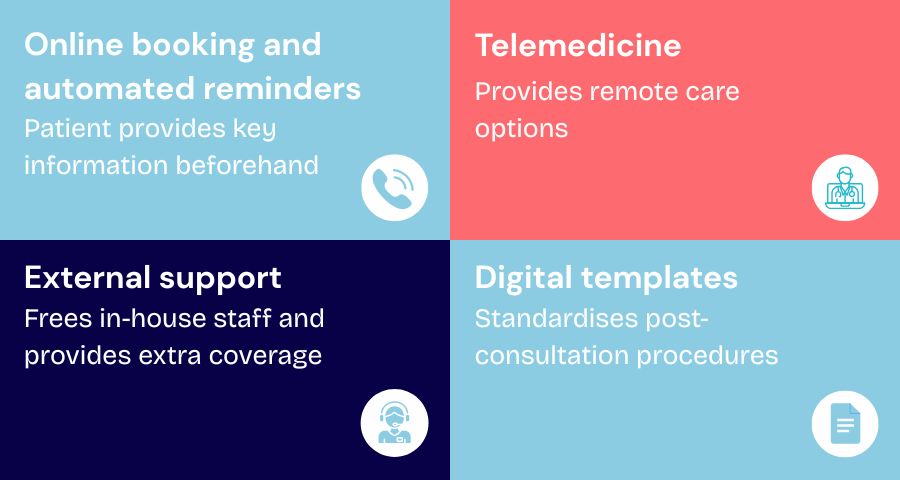
1) Online booking and automated reminders
Online booking and automated reminders reduce manual back-and-forth.
Online booking also ensures seamless care delivery as the clinic is informed beforehand about the patient’s background.
Automated reminders enable staff to send reminders to patients about their schedules.
2) Telemedicine
Telemedicine can be reserved for follow-ups that do not require physical examination, freeing up in-clinic slots for higher-need cases.
3) External support
Staffing and support models matter just as much as tools.
Clinics can add extra coverage through flexible support options, including remote administrative support.
This support can help handle enquiries, appointment changes, and basic coordination.
Patients may not notice the structure behind it, but they do notice when communication is timely and organised.
4) Digital templates
Digital templates for post-consultation instructions can also improve consistency and reduce repeat questions.
In 2026, the clinics that adapt best are the ones that combine simple tech, better processes, and scalable support to keep care accessible and structured.
Meeting Patient Expectations in 2026 as a Private Specialist Clinic
Meeting patient expectations in 2026 requires private specialist clinics to think beyond clinical care alone.
Patients now place equal importance on accessibility, communication, and how care fits into their daily lives.
Clinics can use technology, processes, and support structures thoughtfully to reduce friction and improve responsiveness.
Through practical improvements, private specialist clinics can strengthen patient trust.
They can deliver experiences that feel coordinated and patient-centred.
Adapting in this way allows clinics to remain competitive while maintaining high standards of care in an increasingly experience-driven healthcare landscape.
About the Author: kate