
In recent years, more and more Singapore companies have started to rethink how they build and manage their teams.
Why? Because of the rising labour costs, tighter hiring conditions, and the competitive business landscape, which demands companies, especially SMEs, to stay agile.
Meaning, companies must go beyond traditional full-time employment.
This is also where the meaning of contingent staffing becomes important.
Contingent workforce refers to workers who are freelancers, consultants, contract staff, temporary workers, virtual assistants, or outsourced teams.
In Singapore, this approach is increasingly used for project-based work or to manage seasonal demand, alongside accessing specialised skills outside of the business’ workforce capabilities.
Of course, companies must now navigate the local employment regulations and compliance requirements in Singapore that are beyond the traditional workforce setup.
Now, if you’re a business owner and are considering building your own contingent staffing, then this article will help you learn what contingent work engagement is and what it means for your company in Singapore.
What Is the Meaning of Contingent Staffing?
Contingent staffing refers to workers hired on a non-permanent basis to meet specific business needs.
As such, they are temporary staff hired for specific job descriptions and work arrangements that may not be available from the company’s full-time staffing.
At its core, the meaning of contingent staffing revolves around the concept of flexibility.
This particularly means that if a project has a particular need at a certain time, like a special skill set, or during a peak period, businesses can bring in contingent workers anytime.
In day-to-day business terms, contingent workforce allows companies to scale their workforce up or down without making long-term commitments.
For example, a business may need a freelance designer for a rebranding exercise, or may need additional manpower during a busy sales season.
They may also need to outsource customer support for after-hours inquiries, such as evenings or weekends, where regular employees aren’t working anymore.
Contingent staffing allows you to get your project done when you need more people, then end the employee engagement once the work is done or the demand slows down.
Ultimately, contingent workers are engaged to meet clearly defined business needs, rather than indefinite employment for full-time employees.
This is, of course, perfect for roles that are more suitable to be ongoing and open-ended, depending on the skill set, experience, or mastery that you need in a project.
As a workforce model, it allows you to hire more people without overstaffing your company’s long-term headcount.
Why Singapore Businesses Should Care About the Meaning of Contingent Staffing
Contingent staffing is no longer just an HR concept.
Rather, it has become a practical business consideration for most business owners. Especially in highly competitive environments like Singapore.
Why? With the rising operation costs, manpower constraints, and fast-changing customer expectations, flexibility becomes the key to responding to the current business pressures.
Additionally, the labour market in Singapore is also relatively tight. That’s why companies, especially SMEs, often face challenges in attracting, retaining, and affording full-time talent for every function.
Alongside this, businesses are also expected to move faster, extend service hours, and adopt new technologies—all without significantly increasing their overheads.
This necessitates Singapore businesses to adjust their workforce and their approach to workforce management.
By understanding how contingent staffing works, business owners can better position themselves to make informed decisions. Particularly, when permanent hires make sense and when flexible arrangements are more appropriate.
In short, understanding the true meaning of contingent staffing can help businesses strategically and sustainably plan their manpower, especially during periods of growth, uncertainty, or transformation.
Rather than just a short-term fix, contingent staffing becomes a key workforce strategy.
As such, by leveraging contingent labour, businesses can hire temporary workers without sacrificing their in-house employees or underdelivering project needs.
Benefits of Contingent Staffing for Singapore Companies
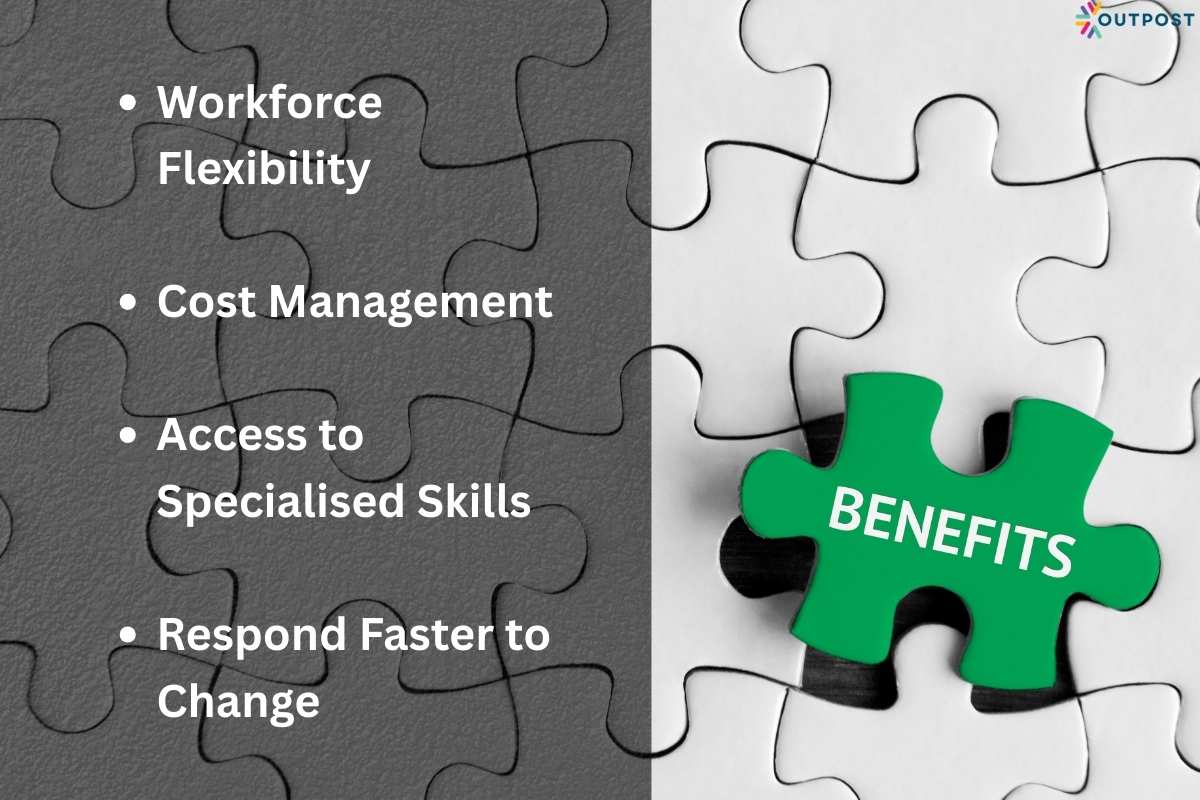
In contingent labour, the main question to consider is how this model can practically support day-to-day operations.
For many Singapore businesses, this is less about replacing permanent roles, and more about complementing existing teams to gain the flexibility needed.
This makes contingent staffing an attractive option for smaller companies, and is even viewed as the future of work.
1. Workforce Flexibility
Contingent workers allow businesses to scale up or down based on actual demand. Not just a fixed headcount.
Flexible work arrangements are then one of the most immediate benefits of this model. Specifically, contingent workers are hired for
For businesses experiencing seasonal fluctuations, project-based workloads, or uneven enquiry volumes throughout the year, this is very useful.
Instead of overhiring your workforce size or overstretching your existing staff, resources can be better controlled.
2. Cost Management
Hiring permanent employees comes with significant long-term commitments.
From salaries, benefits, CPF contributions, and straining costs, each permanent worker employed can quickly add up to the existing expenses.
For businesses, especially SMEs, with tighter budgets, hiring contingent workers is the best strategy to manage expenses more carefully.
In this sense, contingent workers offer significant cost savings as it reduces the resources needed for employment procedures, such as onboarding, training, and upskilling.
3. Access to Specialised Skills
When businesses need a professional with a specific expertise, they can engage with a contingent worker without building it in-house.
This includes:
- IT Support
- Marketing
- Graphics
- Administrative
- Customer Support
As such, businesses can focus on their core operations and urgent tasks without having to overstretch their in-house workforce, while still efficiently meeting operational demands.
4. Respond Faster to Change
Finally, when businesses engage with contingent staff, they can respond faster to change.
For example, a company is trying to enter a new market, launch a new service, or needs to adapt to unexpected demand.
Having access to flexible manpower allows you to move quickly without being locked into permanent hiring decisions.
Challenges and Risks of Contingent Staffing for Singapore Companies
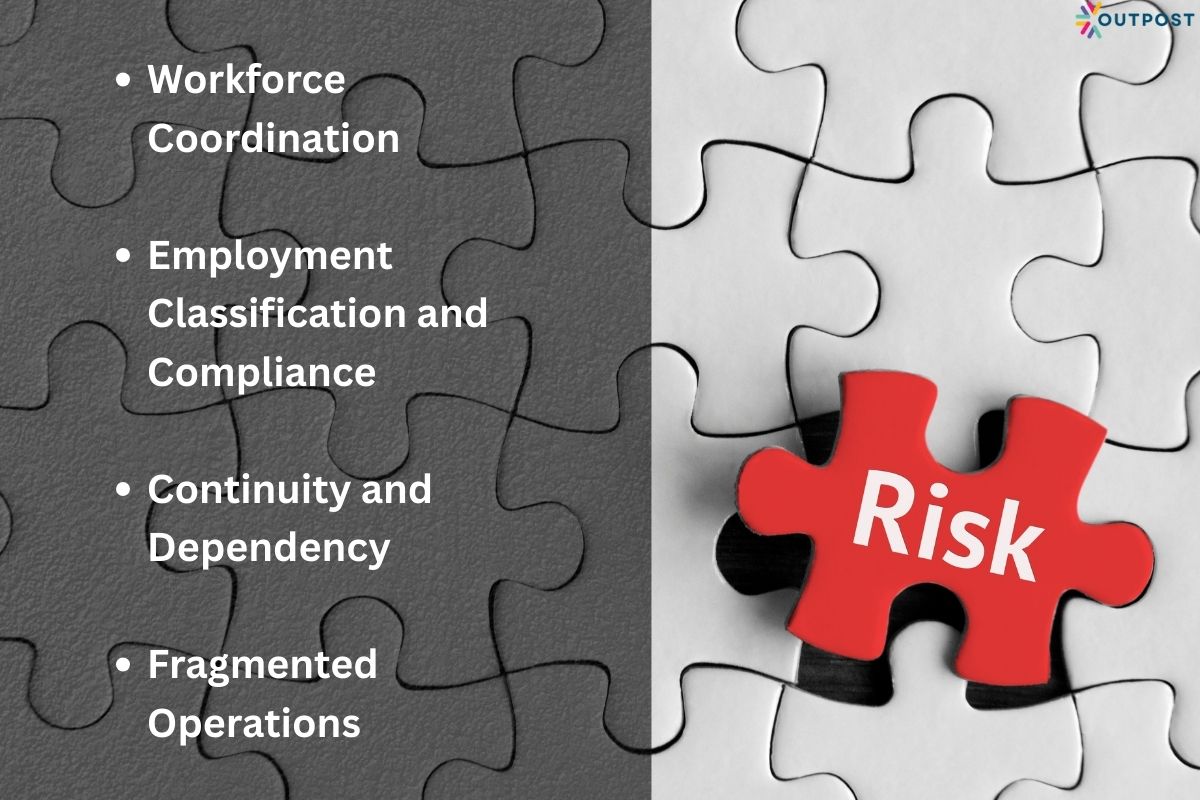
While the meaning of contingent staffing generally points to a desired business flexibility, Singapore companies must also recognise the challenges that come with this workforce model.
It can be very effective, yes; but only if you know how to manage the risks associated with it.
1. Workforce Coordination
Contingent workers are often engaged on specific tasks.
While contingent
This means that they are most likely not fully involved in the internal processes or culture of the company.
If the roles and responsibilities are not clearly defined from the outset, then communication gaps, unclear expectations, or service delivery inconsistencies can emerge.
2. Employment Classification and Compliance
In Singapore, the distinction between an employee and an independent contractor carries legal and financial implications.
This is because the country’s regulatory landscape places a strong emphasis on proper worker classification and fair treatment.
To illustrate, workers engaged under a contract of service are considered as “employees” and are covered by the Employment Act. This means that they are entitled to CPF contributions, statutory leaves, and employment protection.
Whereas independent contractors are generally not covered by these provisions.
Intentionally or not, if you misclassify workers, businesses can be exposed to penalties, backdated CPF contributions, and regulatory scrutiny. These lead to legal issues.
This is why companies in Singapore have to carefully structure their engagements, especially regarding their contracts and the actual nature of the work relationship.
3. Continuity and Dependency
Not properly managing contingent staff also risks the emergence of continuity and dependency.
Why? Because contingent workers are not permanently tied to the company.
So, businesses may face disruptions should a contract unexpectedly end or a key individual become unavailable due to their own commitments.
Without the proper handover processes or documentation, you can risk having significant knowledge gaps that could be detrimental to your projects.
4. Fragmented Operations
Finally, if a business is heavily relying on contingent staffing without properly planning its business approach strategically, it can lead to fragmented operations.
For Singapore companies, flexibility must be balanced with stability and sustainability.
Thus, companies should be able to appropriately handle contingent workforce management alongside the nuances of the dynamic business landscape.
Rather than a band-aid solution, businesses must look at contingent staffing as a model that can support their projects rather than completely relying on it to replace the in-house staff.
Final Thoughts

For Singapore companies, understanding the meaning of contingent staffing has become increasingly important to navigate the complex and demanding business environment.
As a business model, contingent staffing offers an alternative and flexible way of structuring teams without solely relying on permanent in-house staff. This makes it easier for companies to shift and adapt towards operational pressures.
When decisions regarding staffing are made with practical and informed thought processes, contingent staffing can support business agility, cost control, and access to specialised skills.
However, it requires careful planning, clear role definitions, and deep awareness of Singapore’s regulatory landscape.
This means that the key to success is not choosing between permanent or contingent staffing. Rather, it’s knowing how to use each approach appropriately depending on the needs of the business.
So, if you’re considering structuring your team, you should first look for an expert on outsourced teams from staffing agencies.
This way, they can guide you on how to properly manage your workforce, while remaining flexible in an evolving market.
About the Author: Tansi G