


While browsing, website visitors often have questions already.
This can range from wanting to confirm prices, check product availability, or clarify service details—all before they make a decision to actually avail a product or service.
If they can’t get an answer immediately, many of them would simply leave the site, and look for another business with more accessible information available.
If you’re also facing the same dilemma, you might be wondering what the best live chat for website for your business is to solve this customer care service problem.
For starters, through live chat tools, businesses can instantly respond to questions and enquiries.
In fact, instead of waiting for email replies or phone calls, customers can ask questions directly through a chat window while still on the website.
This makes it easier for businesses to engage potential customers at the exact moment they’re already considering making a purchase.
These live chat software are often handled by human agents who may be outsourced to ensure 24/7 coverage for SMEs with limited manpower.
So, if you’re considering adding live chat to your business website and would like to explore customizable chat widgets, or even features like AI chatbots, to engage with website visitors, this article is for you!
What Is a Live Chat Tool for Website Support?
In Singapore, live chat has become a practical customer support tool for businesses, especially as the country has a high digital adoption rate.
But before choosing a platform, you must first understand what live chat software tools are and what they actually do.
A live chat tool is a software application that allows website visitors to communicate directly with a business through a chat window embedded on the website.
So, instead of sending emails or making phone calls, customers can ask questions instantly while browsing a page. This allows your customer service to provide instant support through proactive chat solutions.
This means that when a visitor opens the chat window, the message is routed to a support agent through a dashboard where conversations can be managed in real time.
Some tools also include automated responses or chatbots that answer common questions before transferring the conversation to a human agent. This allows for general enquiries to be answered immediately.
For businesses, live chat tools make it easier to engage potential customers at the moment they are exploring products or services.
This immediate interaction helps address concerns quickly and can guide visitors toward making enquiries, bookings, or purchases.
What Makes the Best Live Chat for Website Support
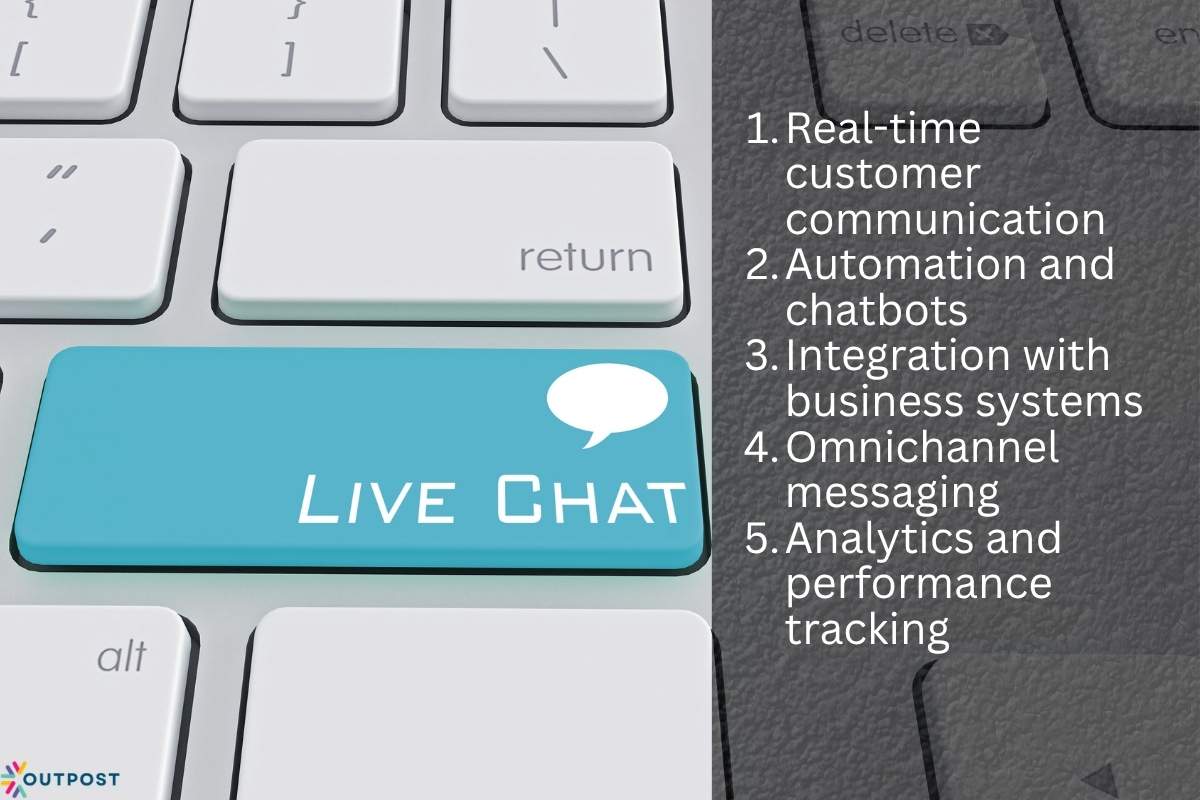
While many platforms offer similar core functions, the best live chat for website support typically includes a combination of real-time communication, automation, and integration capabilities that help businesses manage conversations efficiently.
So, if you’re looking for the best live chat system that can provide the best customer support for your clients, these are the aspects you should consider.
1. Real-Time Customer Communication
The most important feature of a live chat app is the ability to respond to customers instantly.
Without even leaving the page, website visitors can ask questions and receive answers in real-time, usually through a live chat window.
This proactive chat invitations provide immediate interaction, which helps businesses address doubts quickly and guide potential customers toward making a purchase or enquiry.
2. Automation and Chatbots
Many modern live chat tools include automated responses or AI chatbot features.
Automation can answer common questions, direct customers to relevant pages, or collect basic information before a human agent joins the conversation.
This means that an AI-powered live chat software (utilising AI agents) can provide a customised chat experience, enabling businesses to manage higher volumes of enquiries without overwhelming their support staff.
Therefore, this live chat strategy can help human agents focus on more pressing or urgent concerns.
3. Integration with Business Systems
The best live chat platforms integrate with common customer service tools such as CRM systems, helpdesk software, and email platforms.
This allows businesses to keep records of customer conversations and maintain a consistent communication history across multiple channels.
In this sense, implementing live chat software means that you have to choose based on how well it can complement your existing business systems.
4. Omnichannel Messaging
Customers today often move between different communication channels.
This means that your support software must have features that can accommodate chat volume.
For a more seamless support experience, some live chat tools allow businesses to manage conversations from websites, messaging apps, and social media platforms within a single dashboard.
5. Analytics and Performance Tracking
Advanced live chat platforms provide insights into response time, conversation volume, and customer satisfaction.
For businesses, these analytics can help measure the effectiveness of their customer support and identify areas for improvement in their customer care performance.
How to Choose the Best Live Chat Tool for Your Website Needs
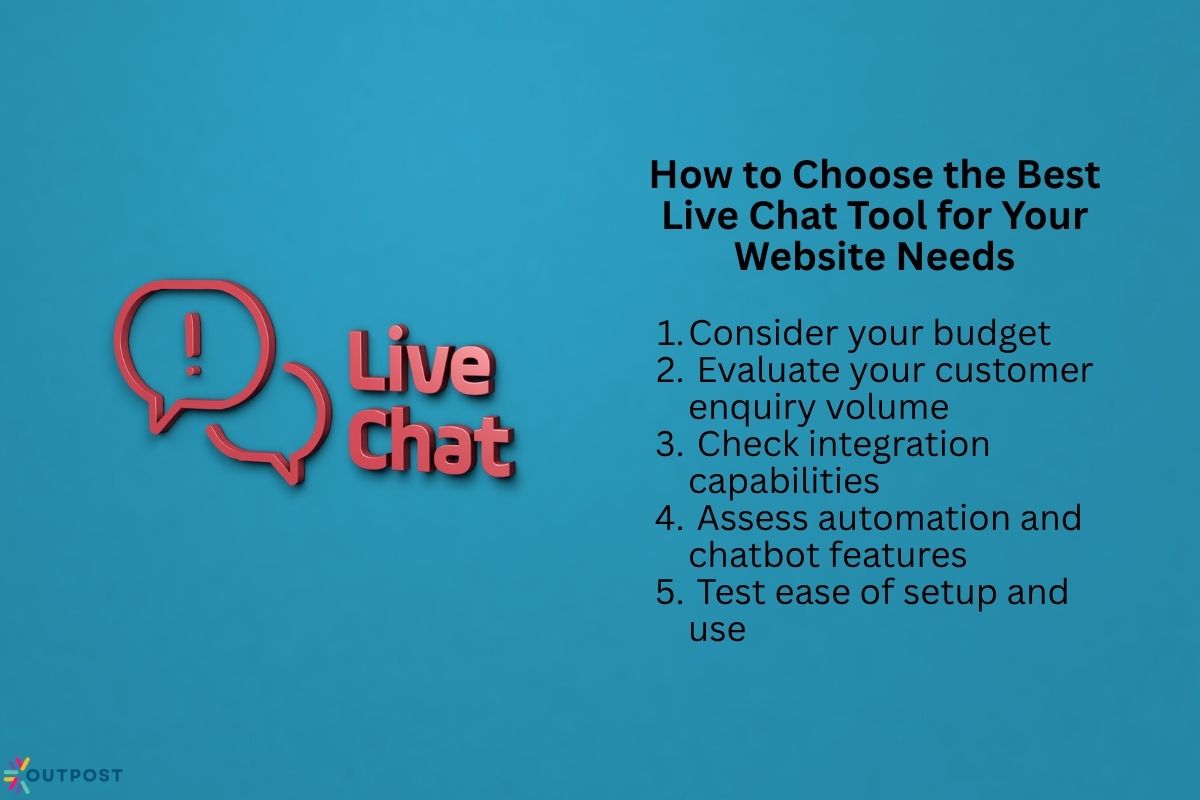
Selecting the best live chat software for website needs depends on the size of the business, the type of customer enquiries received, and the existing technology used by the company.
1. Consider Your Budget
Live chat platforms offer a range of service subscriptions, from free tools to enterprise-level solutions with monthly subscription fees.
As such, small businesses or startups may prefer free or low-cost options.
While larger organisations may require systems with advanced features that support multiple agents and automation features.
2. Evaluate Your Customer Enquiry Volume
Different businesses will have varying live chat needs depending on the volume of messages or enquiries they receive each day.
Businesses with high website traffic would require more extensive live chat features, specifically tools with automation features and multi-agent support, to help manage their conversations efficiently.
While smaller businesses that receive fewer inquiries may only need a simple chat functionality.
3. Check Integration Capabilities
For businesses with CRM software or helpdesk platforms, it’s essential to choose a live chat tool that can be easily integrated with their existing systems. This is important for workflow efficiency.
Accordingly, integration between each tool and software would allow businesses to store conversation histories, and subsequently maintain an organised customer record.
4. Assess Automation and Chatbot Features
Businesses that receive similar enquiries repeatedly may benefit from tools that offer chatbot capabilities.
In particular, automation can help answer frequently asked questions or guide customers through common processes, which would lessen the burden on the customer support team.
5. Test Ease of Setup and Use
Some live chat tools can be installed on a website within minutes, while more complex tools would require technical configurations.
This means that setting up live chat is an added effort and investment on your end.
As such, you must look for the right customer service software with the necessary live chat solution.
So, for businesses that are still looking for the right live chat software for their needs, testing a platform through free trial subscriptions can be helpful to avoid spending on systems that may not fit their needs.
Best Live Chat Tools for Singapore Business Websites
Dozens of live chat platforms are available today, but some stand out for their reliability, features, and ease of use, especially as a customer service chat solution.
To help you choose the right live chat software for your business website needs, we present a list of tools that are widely used by businesses and can be suitable for websites serving customers in Singapore.
1. LiveChat
One of the most established live chat platforms is LiveChat.
LiveChat is often chosen by businesses for its reliability and ability to support multiple agents who are simultaneously managing conversations; thereby, giving live chat support for big chat volumes.
This is because they offer a professional chat interface, strong reporting capabilities, and a wide range of CRM and helpdesk system integrations.
LiveChat also includes automation features, such as canned responses and chat routing. This allows businesses to handle enquiries more efficiently.
Commonly used by: E-commerce stores, service providers, and companies with dedicated customer support teams.
2. Intercom
Intercom is a customer messaging platform that combines live chat with automation and customer support tools.
Accordingly, their features include automated messages, chatbots, and customer segmentation.
These tools allow businesses to engage visitors proactively and direct enquiries to the appropriate teams.
So, for businesses that want to manage customer conversations from a single interface, Intercom is a great choice.
Commonly used by: Technology companies and online businesses that want a unified system for both customer support and marketing communication.
3. Zendesk Chat
Zendesk Chat is part of the larger Zendesk customer support ecosystem.
For businesses that are already using Zendesk helpdesk solutions, Zendesk Chat is a good choice as it can already integrate seamlessly with their ticketing systems and support workflows.
This integration allows customer service teams to convert chat conversations into support tickets and track issues until their resolution.
Thereby ensuring that all customer enquiries and concerns are appropriately addressed in a timely manner.
Commonly used by: Organisations that manage large volumes of customer enquiries and require structured support processes.
4. Tidio
Designed primarily for SMEs, Tidio is a platform which combines live chat functionality with chatbot automation.
This makes it useful for businesses that want to respond quickly to customer enquiries while also automating common interactions.
Additionally, Tidio integrates with several e-commerce platforms, such as Shopify and WooCommerce. This makes it a popular option among online stores that want to answer product questions and assist customers during the purchasing period.
Commonly used by: SMEs, online stores, and businesses that utilise e-commerce platforms.
5. Crisp
As an all-in-one messaging platform, Crisp allows businesses to manage conversations across multiple channels.
Aside from website chat, it can also handle messages from email and social media platforms.
One significant advantage of this live chat tool is its unified inbox, where businesses can track customer conversations from different sources in one place.
Support teams can then maintain consistent communications with customers, regardless of how they reach out.
Commonly used by: SMEs and businesses that need unified inboxes.
6. HubSpot Live Chat
HubSpot offers a free live chat tool that integrates directly with its CRM system.
Businesses can automatically record conversations with website visitors and link them to contact records within the CRM.
This integration makes it easier for businesses to follow up with potential customers, and maintain organised communication histories.
Commonly used by: Companies that already use HubSpot for marketing or sales management.
7. tawk.to
If you’re looking for a completely free live chat platform, tawk.to is something you can consider.
Despite being free, this platform offers several useful features, which include real-time messaging, visitor tracking, and chat history. This means that businesses can already try out a live chat tool, despite not being sure what they need yet.
This is because even if tawk.to is free, it has enough features to fulfil their website’s live chat needs.
As such, those that wants to experiment with live chat without significant financial investment, this tool can be a practical starting point.
After all, businesses can upgrade later on with more advanced tools if their support needs to grow.
Commonly used by: Small businesses, SMEs, and startups that need more cost flexibility or those still experimenting with live chat tools.
Final Thoughts: Choosing the Best Live Chat Tools for Website Needs
Live chat tools have become an important part of modern business websites.
These tools help answer questions quickly, and improve overall customer experience, all by allowing companies to communicate with visitors instantly.
The best live chat for website support tools ultimately depends on the needs of your business.
Smaller companies may prefer simpler and more affordable solutions, while larger organisations may require more advanced automation and integrations.
For Singapore businesses, implementing live chat can be a competitive advantage to meet customer expectations for fast and convenient communication.
However, for businesses with smaller manpower or with already-stretched in-house teams, this is best paired with an outsourced customer support agent, such as those from Outpost.
Ultimately, with the right tool and well-managed support processes, live chat can help businesses engage website visitors more effectively, and turn enquiries into opportunities.
About the Author: Tansi G