
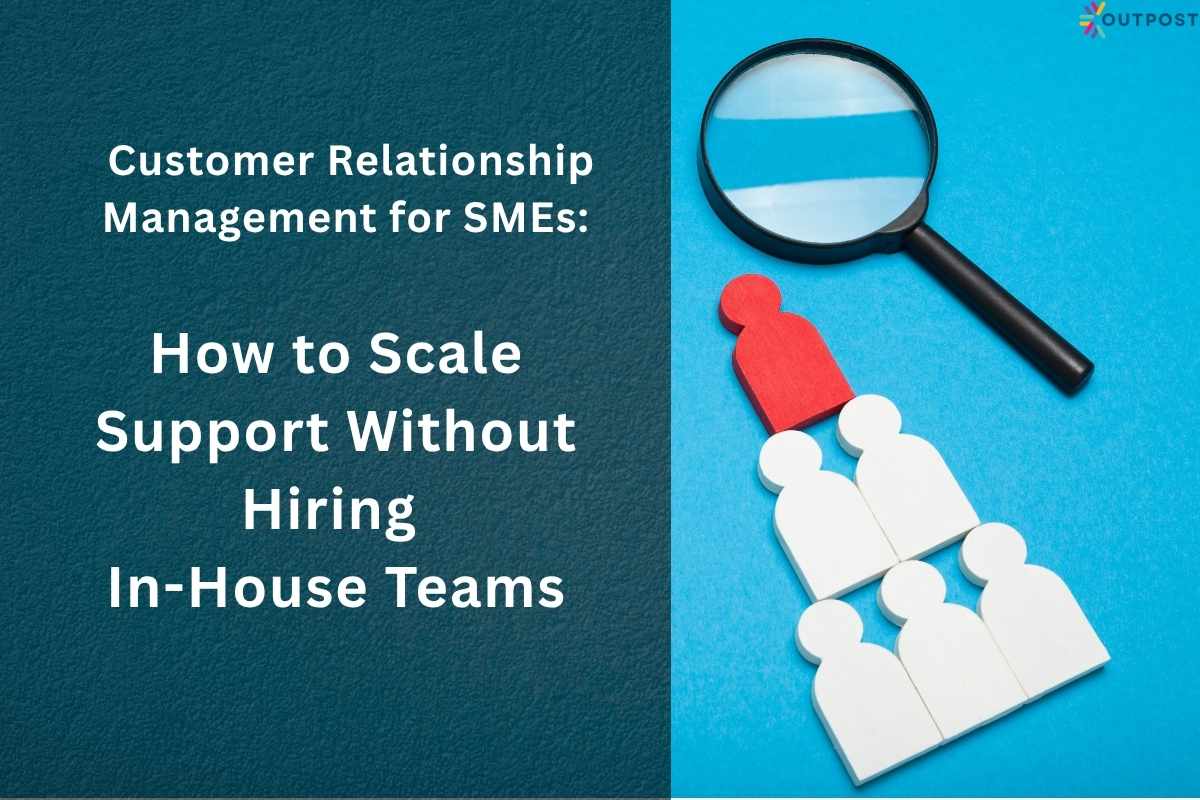
Customer expectations have drastically changed over the years.
Today, customers expect fast and consistent responses across multiple channels. From calls, WhatsApp, email, and even your social media platforms.
So, for SMEs, this creates a real challenge. Why? Because customer enquiries now come in throughout the day, and especially outside of business hours.
This is where many SMEs struggle with relationship management with customers.
It’s not a lack of effort; rather, a lack of coverage.
Most businesses simply don’t have the manpower to keep up, which leads to missed messages, delayed replies, and inconsistent responses. This slowly costs you customer trust and valuable opportunities.
But don’t worry! The good news is that scaling customer relationship management no longer requires building a large in-house team, especially when options like Outpost’s outsourced customer service are there to help.
SMEs can then deliver responsive and high-quality support as long as they have the right mix of outsourcing, after-hours support, and structured processes—all without increasing headcount.
So, if you’re ready to learn what CRM is all about for hospitality businesses, this article details what you need to know in choosing the right CRM for you.
Understanding Customer Relationship Management and Why It Matters for SMEs
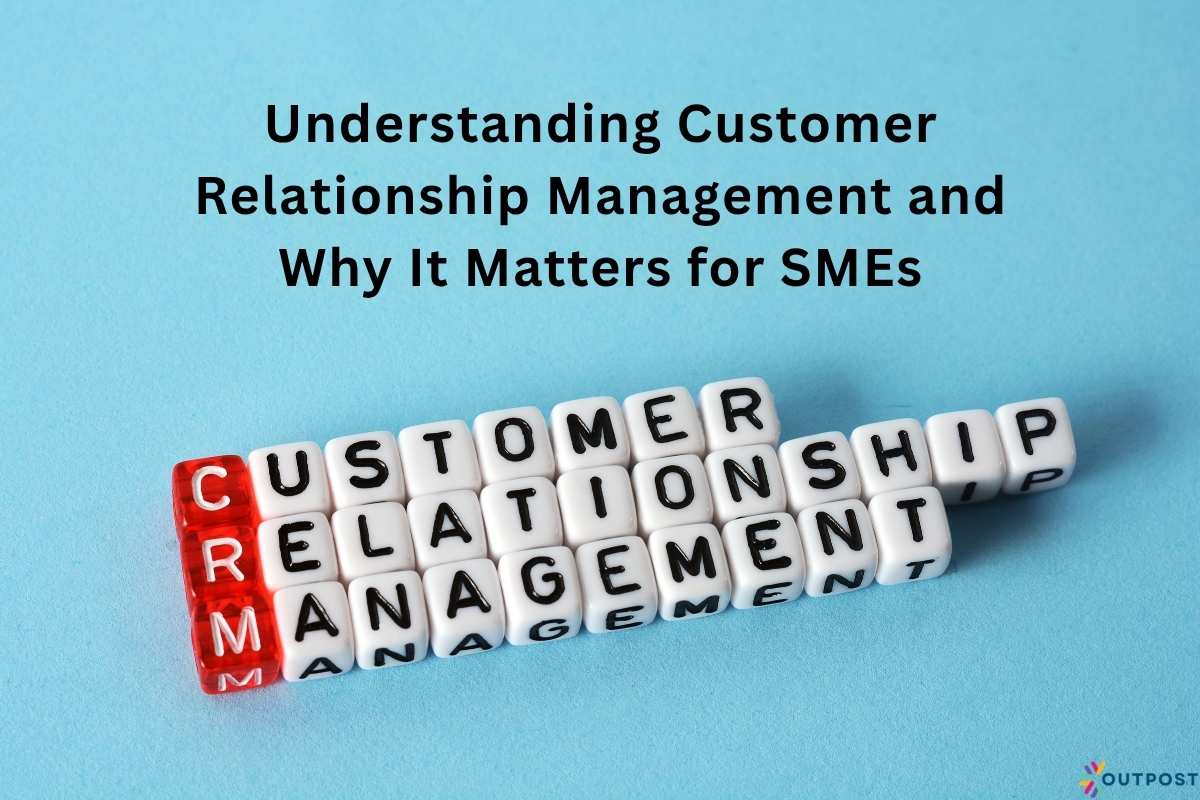
CRM stands for customer relationship management, and contrary to popular belief, it’s definitely more than just a software.
In reality, it’s how a business manages every interaction with their customers—from the first enquiry to post-sales support and long-term retention. All of which helps you understand your customer and influences customer retention.
For SMEs, the benefits of using CRM are very crucial for their growth and sustainability.
Fast replies can be the one difference between securing a customer and losing them to another competitor. This is because consistent support builds trust, while poor responsiveness creates friction.
For small businesses in Singapore, this is even more noticeable. Whether it’s a clinic, an e-commerce seller, or a tuition centre, most businesses rely heavily on WhatsApp and instant messaging.
This very aspect means that most Singapore customers expect replies within minutes—not hours. Failing to reply within their expected period would ultimately lead them to just move on to another business with faster responses.
From these, it can be seen that an effective CRM system is not just about being helpful. It’s about being available, responsive, and consistent at scale.
As such, understanding CRM and how CRM helps businesses compete in a highly digital market is a critical factor in ensuring sustainability and success in the hospitality industry.
The Biggest Challenge in Relationship Management with Customers
The biggest issue that SMEs face is not their capability to manage customer relations—it’s their capacity.
SMEs often have a small team, with founders or key staff handling most of the customer enquiries themselves.
This works at first, but as the business grows, several problems begin to appear, especially when it comes to establishing an operational CRM system that can effectively manage customer relationships.
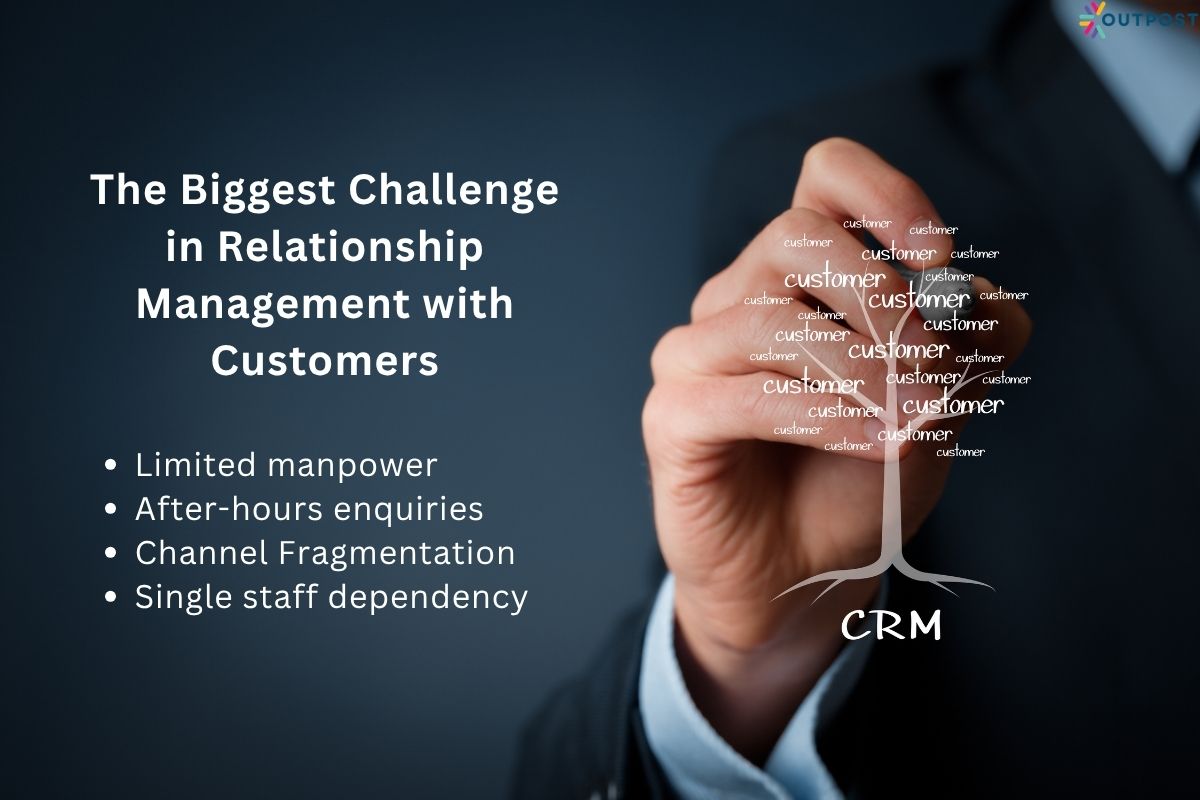
Limited manpower
Realistically, small teams can’t handle all enquiries across multiple channels, while also managing operations.
Dealing with customer service takes a lot of time and effort on an already strained team.
This means that small teams wouldn’t be able to monitor the entire customer lifecycle, which is crucial for engaging new customers and tailouring approaches to retain existing customers.
After-hours enquiries
Enquiries after business hours often become a blind spot. Customers often reach out at night, on weekends, or during public holidays.
Basically, the time that they are free is almost always the time your business is closed.
So, without coverage, these enquiries go unanswered for hours, sometimes even days.
Channel fragmentation
Messages come from different platforms. So, without a centralised system, it becomes easy to miss or duplicate responses.
To an extent, this also makes customer data unorganised, especially for people who may message you on different platforms.
Fragmented channels can make it hard for your CRM solutions to establish a customer profile that can analyse customer behaviour and customer preferences, as well as develop targeted marketing campaigns.
Single staff dependency
Many SMEs become overly dependent on the founder or the single staff member who takes on calls.
This creates bottlenecks and makes the entire customer experience inconsistent.
Ultimately, slower response times, missed opportunities, and weak customer experience all points to how a business is not equipped to handle demand at scale.
Why Hiring In-House Teams Is Not Always the Best Solution
For businesses, the most obvious solution is to hire more staff. However, for many SMEs, this quickly becomes inefficient.
Hiring in-house comes with fixed costs, like salaries, CPF contributions, training, and ongoing management. So, while hiring in-house customer support might sound like the answer… It’s not.
Customer enquiry volumes aren’t consistent throughout the day. This means that businesses may end up paying full salaries for staff who may be underutilised during off-peak hours.
Aside from this, coverage becomes another challenge. Even with a permanent team, nights, weekends, public holidays, and staff leave may not be fully covered. This creates gaps in customer support, especially during the times when the customer needs a staff member to talk to the most.
Another challenge why in-house teams may not be the best solution is the speed of scaling. The process slows down due to recruitment, onboarding, and training, which makes it hard for SMEs to respond quickly to growth and demand peaks.
This, of course, doesn’t solve the problem. For many businesses, in-house teams simply increase costs but don’t increase coverage.
This can be seen when:
- Calls or messages are frequently missed after business hours
- Founders are still replying to customers personally, or the customer relationship manager is being overstretched
- Customers complain about slow response times or even total unresponsiveness
- Enquiry volume is increasing, but the team cannot keep up
- There’s a need for a 24/7 hotline or monitoring support
When these issues keep occurring despite your expanded in-house customer support team, then the issue isn’t manpower: it’s the structure of your customer relationship management approach.
What SMEs need is a smarter way to manage customer relations, not just a bigger team.
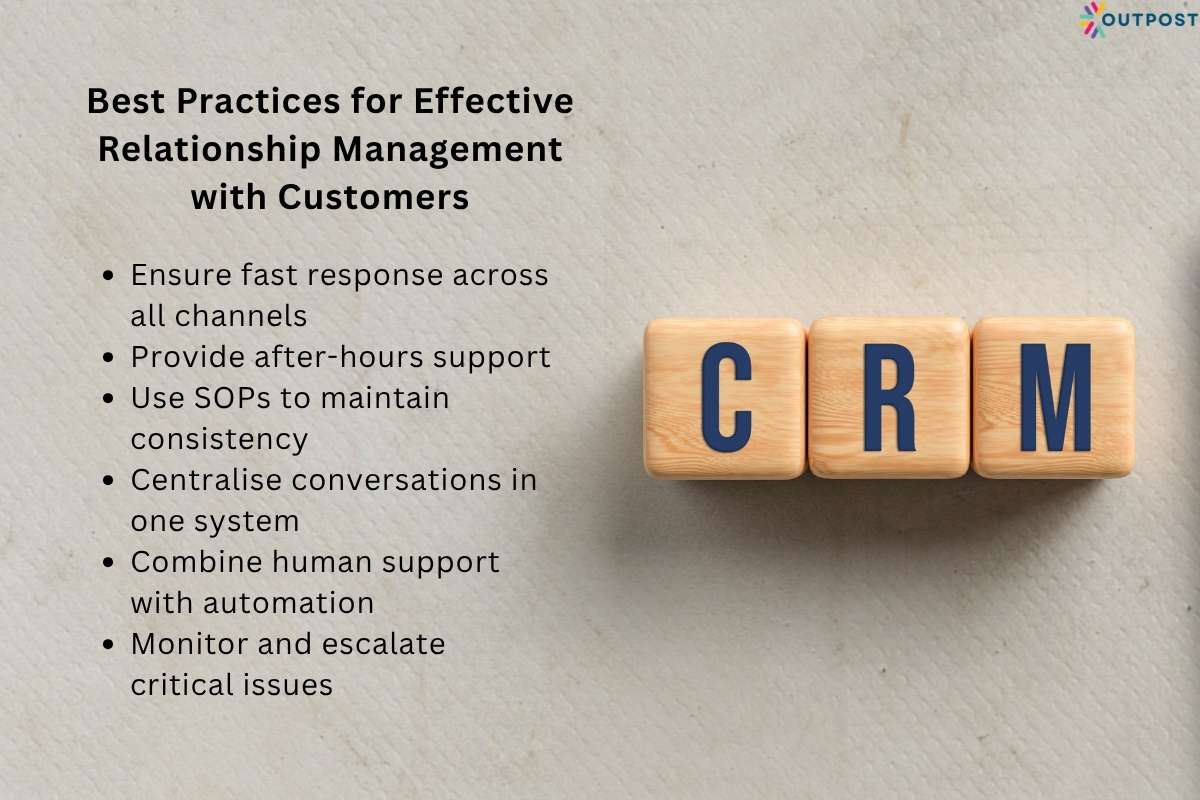
Best Practices for Effective Relationship Management with Customers
Scaling customer relationship management requires a combination of processes, tools, and support that would enhance their customer interactions.
So, for businesses that are looking to successfully manage high enquiry volumes, they should consider these best practices:
1. Ensure fast response across all channels
One of the most important customer service factors is speed. Even a simple acknowledgement message can make a huge difference.
As WhatsApp is widely used for businesses in Singapore, businesses expect near-instant replies. So, businesses that respond quickly are more likely to convert enquiries into paying customers.
Ultimately, this means that having a wide-coverage CRM is necessary, as it allows the business to answer whenever a customer has a question.
Therefore, hospitality companies should look for the right CRM applications that will give them the right response benefits based on what their business needs, aligned with the product or service they are offering.
Doing so helps businesses entice potential customers into making a decision when they feel that a company is responsive.
2. Provide after-hours support where it matters
Customer enquiries don’t follow business hours. They follow the time that’s most convenient to them, which is most often the time that businesses are already closed.
After-hours CRM gives the opportunity for the business to understand its direct customers and improve how they perceive the business, towards cultivating customer loyalty.
Having an after-hours hotline or managed inbox ensures that:
- Urgent enquiries are handled promptly
- Customers feel supported at all times
- Opportunities are not missed overnight
- Customer calls are answered immediately
Having someone available to respond appropriately provides reassurance and improves the overall customer experience.
3. Use SOPs to maintain consistency
As support scales, consistency becomes critical, especially since relationship management with customers means that your staff represents your brand.
Having standard operating procedures (SOPs) ensures proper management of CRM practices:
- Common enquiries are handled in a structured way
- Responses are aligned with the business’s tone and policies
- Escalations are managed correctly
This is particularly important when working with outsourced teams, as it allows them to respond accurately without constant supervision.
Ultimately, having an SOP means that there’s a level of commitment and quality that agents will strive for in how they interact with customers, as well as how relationships and interactions can be optimised.
4. Centralise conversations in one system
Managing multiple communication channels without a central system leads to missed messages and duplicated responses.
This also means that not having a centralised conversation system means staff won’t have access to the customer information needed to answer their queries.
Such an aspect becomes a problem when the guest supposedly has a previous contact with customer service representatives of the business already, and is just following up on their previous enquiries.
By having a centralised system, the business can better tailour its marketing strategies as it can perform more accurate customer segmentation.
Using a CRM or helpdesk system allows businesses to:
- Track all customer interactions in one place
- Assign and manage enquiries efficiently
- Maintain continuity across different channels
In Singapore, SMEs can tap on government support, like the Productivity Solutions Grant (PSG), to adopt CRM tools. This makes these systems more accessible.
5. Combine human support with automation
Automation is steadily becoming a key strategy for businesses. This is because it can handle repetitive tasks, which frees up human staff to focus on more complex responsibilities.
Using automation can then provide a cost-effective support for your human staff, which includes:
- Answering frequently asked questions
- Providing order updates
- Booking appointments
By using chatbots and automated responses, SMEs can ensure that customer messages receive immediate replies, even outside business hours.
Additionally, the human staff can focus on handling nuanced or sensitive situations more effectively.
With these in mind, the best type of CRM strategy is one that improves customer service and customer engagement without compromising the human aspect of the service.
6. Monitor and escalate critical issues
CRM is not limited to responding to enquiries. It also involves monitoring and escalation of customer needs.
So, instead of having your staff constantly on standby, a structured approach can be used.
This means having support teams monitor systems and escalate only when necessary to improve efficiency and effectiveness.
Scaling Customer Relationship Management the Smart Way
The most effective approach to scaling relationship management with customers is not to rely on a single solution, but to combine several elements into a flexible system.
This typically includes:
- Outsourced support for calls, WhatsApp, and email
- After-hours hotline coverage for continuous availability
- Automation tools for handling routine enquiries
- Monitoring and escalation processes for operational issues
- CRM systems to centralise and track interactions
This hybrid model allows SMEs to scale support based on demand. Instead of committing to fixed headcount, businesses can adjust coverage as needed, ensuring that customers are always supported without unnecessary cost.
With structured processes and dedicated support, customers receive a consistent level of service regardless of when or how they reach out.
Final Thoughts: CRM for Improved Customer Satisfaction
At its core, relationship management with customers is all about responsiveness, consistency, and reliability.
For SMEs in Singapore, the challenge is never about the willingness to serve the customers: it’s the capability to do so at scale.
In many cases, hiring more staff isn’t the answer. It’s more of a band-aid solution that fails to address the root problem of weak customer service.
By combining outsourcing, after-hours support, automation, and structured processes, SMEs can build a system that works around the clock.
This not only improves the customer experience but also frees up internal resources to focus on growth.
So, if you’re looking for an outsourced team that can handle your customer relationship management needs, Outpost is here for you.
Ultimately, the businesses that respond faster and more consistently are the ones that win.
About the Author: Tansi G