

Pain point
Managing After-Hours System Monitoring and Fault Response
Imagine this: it’s 2am. A system fault is triggered in a waste conveyance system at a live site. There’s no one actively monitoring it. By morning, the issue has escalated into operational disruption.
The reality of managing engineered waste handling systems is that issues don’t follow working hours. For this engineering firm, gaps in after-hours coverage led to delayed responses to system alerts and engineers starting the day with unresolved overnight issues.
Our Solution

Managed by Josh, team leader of trained support agents familiar with system alerts, fault handling, and escalation protocols
Alerts Managed Monthly
Across multiple active sites
Integrated With Client Systems
For real-time logging and escalation
To support the company’s after-hours operations, Outpost implemented a first-response monitoring and escalation system across system alerts and communication channels.
Each alert or notification is assessed using a structured framework aligned with the client’s engineering protocols, enabling accurate classification of incidents based on severity and system impact.
All critical alerts are acknowledged within 5 minutes, ensuring timely escalation to on-call engineers when required.
All incidents are logged, tracked, and made visible within the company’s workflow, ensuring proper escalation, accountability, and continuity into the next workday.
After-Hours Monitoring:
Continuous monitoring and incident response outside standard operating hours, including weekends and public holidays
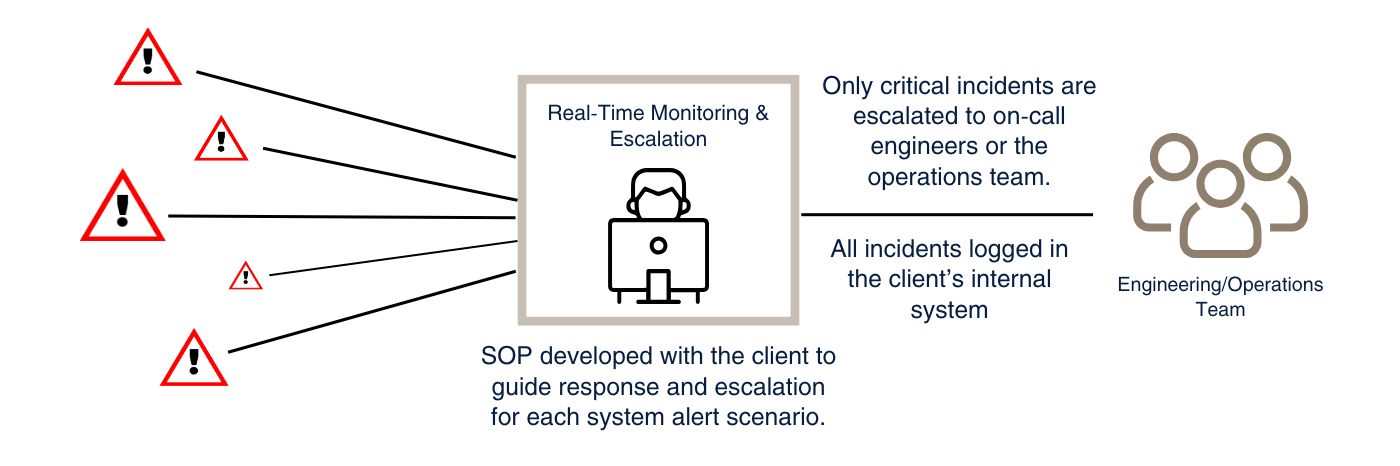
After-hours monitoring and escalation setup across the client’s active sites
“We now have full visibility of all after-hours activity. Every alert is logged and tracked properly, and critical issues are escalated immediately. Our engineers can start the day focused on resolution instead of reviewing overnight incidents.”
Following implementation, the company achieved full visibility across all after-hours alerts, with 100% of incidents logged and tracked in real time. This ensured that no alerts were missed, while all critical issues were identified and escalated promptly to on-call engineers.
With a structured monitoring and escalation system in place, the client saw a significant reduction in delayed responses and repeat incident follow-ups, while maintaining consistent handling across all alert types.
This also led to a reduction in next-day backlog, allowing engineering teams to focus on resolution and maintenance rather than reviewing overnight incidents. Overall, the system improved operational control and ensured continuity across all monitored sites.