


For the private healthcare sector, phone calls remain one of the most important touchpoints between clinics and patients.
Yet for many clinics, unanswered calls have become an accepted part of daily operations, neglecting the quiet cost of weakening patient relationships.
During peak hours, when front-desk staff are juggling registrations, payments, and patient flow, incoming calls are often the first thing to be missed.
Over time, missed calls can nudge patients towards competitors, resulting in the loss of valuable clientele.
However, the issue of unanswered calls is rarely about poor service intent but limited manpower and operational constraints.
As the number of patients may exceed operational capabilities, clinics may become overwhelmed.
Sustainable solutions vary depending on preferences and available options, ranging from internal reorganisation to outsourcing.
For more info, check our dedicated page on virtual medical receptionists from Singapore.
What Unanswered Calls Look Like in Day-to-Day Clinic Operations
Unanswered calls are rarely dramatic events that halt clinic operations.
Instead, they affect the clinic in subtle ways, turning familiar patient faces during routine check-ups into, at best, seasonal visitors.
While no one wants to be a stranger, unanswered calls can lead to negative experiences during a time when patients are likely to be uncertain and vulnerable.
Consider two common situations:
1) Patient A is trying to book a same‑day appointment for a sudden onset of symptoms but gives up after a long wait to no avail.
2) A patient needs urgent follow‑up information about test results but never gets called back beyond a soulless voicemail response.
These small, quiet frustrations accumulate into tangible losses for clinics across the world.
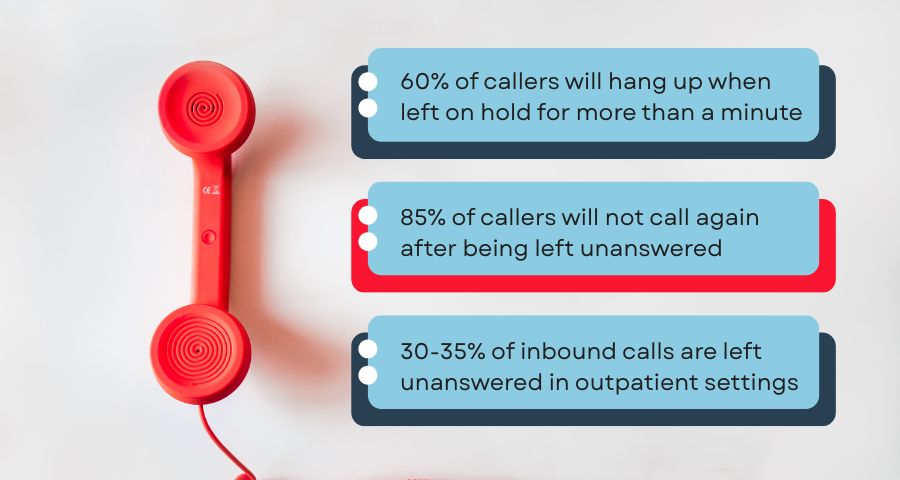
Patient loss can be gradual but not unfelt.
Language and cultural diversity further complicate call handling.
Clinics that serve multilingual populations must ensure clear communication.
Miscommunication due to language barriers increases the chances that a patient will hang up or defer care.
However, simplifying explanations about appointment instructions or follow‑up care is a challenge that has been noted in diverse healthcare call environments.
Across settings, the result is the same. Unanswered patient calls mean:
- Missed bookings
- Delayed care
- Increased administrative work
Over time, these operational gaps degrade both patient satisfaction and clinic performance.
Hence, unanswered calls are not just an inconvenience but a costly feature of daily clinic workflows.
The Cost of Unanswered Calls on Revenue and Patient Experience
Unanswered calls carry a measurable cost to both revenue and patient satisfaction.
In healthcare, the financial impact of missed calls is already well documented.
- For private clinics, each missed call can represent USD 125–200 in lost opportunity.
- Over time, a practice missing just 25 calls a day might forfeit hundreds of thousands of USD annually.
- Studies show that poor phone experiences make patients more likely to switch providers.
- They are also less likely to recommend the clinic.
- Low patient retention damages clinics’ reputations and long-term revenue streams.

Unanswered calls also cause additional operational costs by increasing staff workload and inefficiencies.
Front-desk teams may spend valuable hours managing voicemails, rescheduling, and handling follow-ups manually, which distracts from in-person patient care.
Thus, the impact of unanswered calls also takes away from the quality of service the clinic provides.
Altogether, the financial and experiential costs of unanswered calls underscore why effective call management is essential for clinic sustainability.
Practical Solutions for Reducing Unanswered Calls in Private Clinics
Reducing unanswered calls starts with understanding how they occur and taking steps that fit the clinic’s size and workflow.
One of the simplest first steps is to refine internal processes.
Many clinics find that setting clear phone protocols, such as designated call-handling times or call-back queues, helps staff respond more consistently.
In this way, patients also know what to expect when they’re put on hold and how soon they can get a response.
Clinics can also introduce digital alternatives like online booking and secure messaging so routine enquiries do not always rely on a phone answer.
Online appointments also allow the clinic key information about the patient beforehand.
This is useful for coordinating with clinic staff about what services the patient is likely to avail.
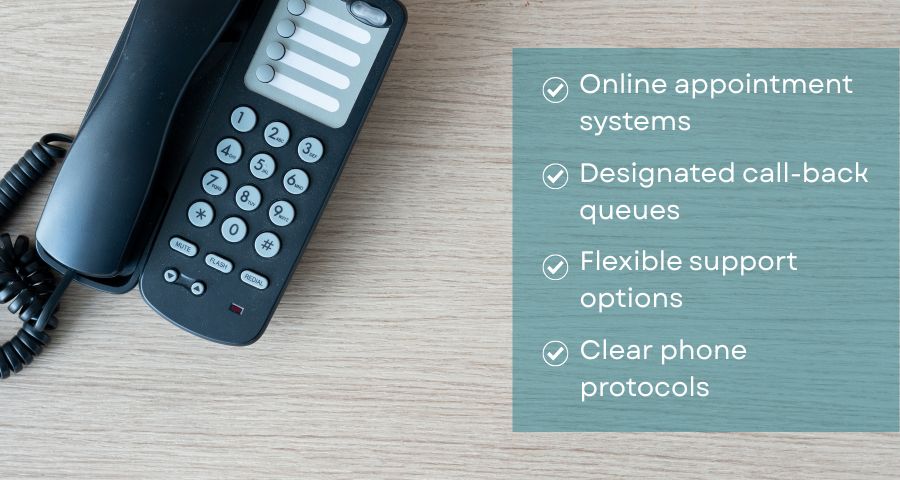
For clinics with limited staffing, flexible support models are effective.
Many practices choose to partner with trained remote professionals who can manage call traffic during peak hours or after clinic hours, ensuring every patient interaction is handled promptly.
A virtual medical receptionist can answer incoming calls, confirm appointments, and triage enquiries, freeing on-site staff to focus on in-person care.
Providers can also scale this support up or down depending on demand without the commitment of hiring additional full-time staff.
This helps clinics stay lean without sacrificing service quality.
Maximising Value from Every Patient Call
The quiet cost of unanswered calls in private clinics equates to loss in revenue, patient trust, and staff efficiency.
Missed appointments and delayed responses affect both immediate bookings and long-term loyalty.
Clinics can address these challenges through clear internal processes, smarter phone systems, and online booking options.
Flexible support options include employing a virtual medical receptionist, offering vital services to ensure patient satisfaction and long-term retention.
Through proactivity, clinics can transform the quiet cost into maximum value founded on robust patient relationships.
About the Author: kate